Healthcare Practice Workflows: Reclaiming Time From Patient Admin
Key Results
- Front desk admin time reduced by 12+ hours per week
- Appointment no-shows decreased by 35%
- Patient intake time reduced from 15 minutes to 3 minutes
- Document retrieval time reduced from 5-10 minutes to under 30 seconds
The Challenge
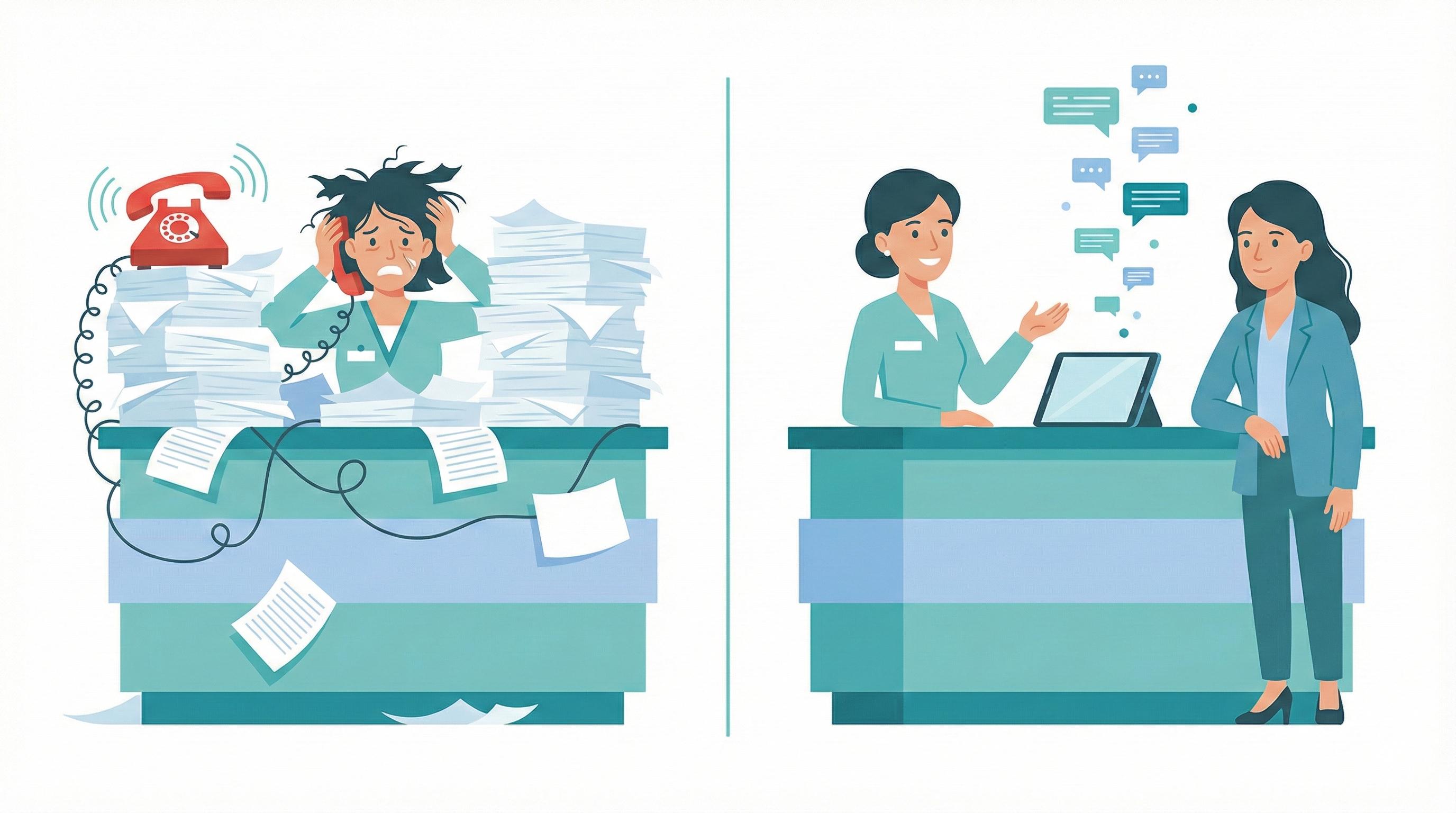
This is the pattern we see in growing medical practices: The front desk team becomes overwhelmed not by patients, but by paperwork. As practices grow from 2-3 practitioners to 5+ over a few years, administrative processes rarely scale with them.
Common Pain Points
- Manual reminders: Appointment reminders sent via phone calls — 20-30 per day, each taking 2-3 minutes
- Paper-based intake: Patient intake forms collected on paper, then manually entered into the records system
- Scheduling friction: Follow-up appointment scheduling requires checking multiple calendars and calling the patient
- Tracking chaos: Insurance pre-authorization tracking lives in a spreadsheet that's frequently out of date
- Time drain: Staff typically spend roughly 12 hours per week on tasks that are identical and repetitive
Our Approach
Phase 1 — Workflow Observation and Audit
We spend time observing front desk workflows, understanding current processes, and tracking time spent on each category of administrative task. This reveals exactly where time is being lost.
Phase 2 — System Implementation
We implement streamlined solutions:
- Automated appointment reminders via SMS and email, with confirmation links that update the calendar automatically
- Digitized patient intake with online forms that pre-populate the records system — patients fill them out before arrival
- AI-powered document search across patient records so staff can find any file in seconds instead of digging through folders
- Automated follow-up scheduling triggers based on visit type and practitioner recommendations
- Simple insurance tracking dashboard with automated status alerts
Phase 3 — Staff Training and Optimization
Hands-on training with all front desk staff, including quick-reference guides for every new workflow.
Technology Stack
Most solutions use simple automation and tool integration. The one AI component is typically the document search system, which is necessary because patient records are unstructured (scanned documents, handwritten notes, various formats). This is the right use case for AI — high volume unstructured data that needs to be searchable.
Outcomes You Can Expect
Based on implementations with similar practices:
- Front desk admin time: Dropped by 12+ hours per week
- Appointment no-shows: Decreased by 35% due to automated reminders with easy rescheduling
- Patient intake time: Dropped from 15 minutes to 3 minutes
- Document retrieval: Went from 5-10 minutes of searching to under 30 seconds
- Staff satisfaction: Significantly lower stress levels and higher job satisfaction reported
Typical timeline: 6 weeks from kickoff to full deployment.
About This Use Case
This scenario represents a common pattern we've solved for healthcare practices. Our approach is informed by our experience digitizing healthcare systems and patient management workflows since 2014, including work with 100+ health centers. The specific implementation details reflect composite patterns from multiple engagements.
Logistics Admin Automation: The Multi-System Challenge
How we eliminate the 47 manual touchpoints that bog down logistics operations, reducing admin time by 60% and reclaiming 1.5 FTEs worth of work.
Legal Document Management: Making Years of Contracts Searchable
How AI-powered document search transforms legal research from hours to seconds, recovering 20+ billable hours per month.