AI vs. Simple Automation: A Practical Guide for Business Owners

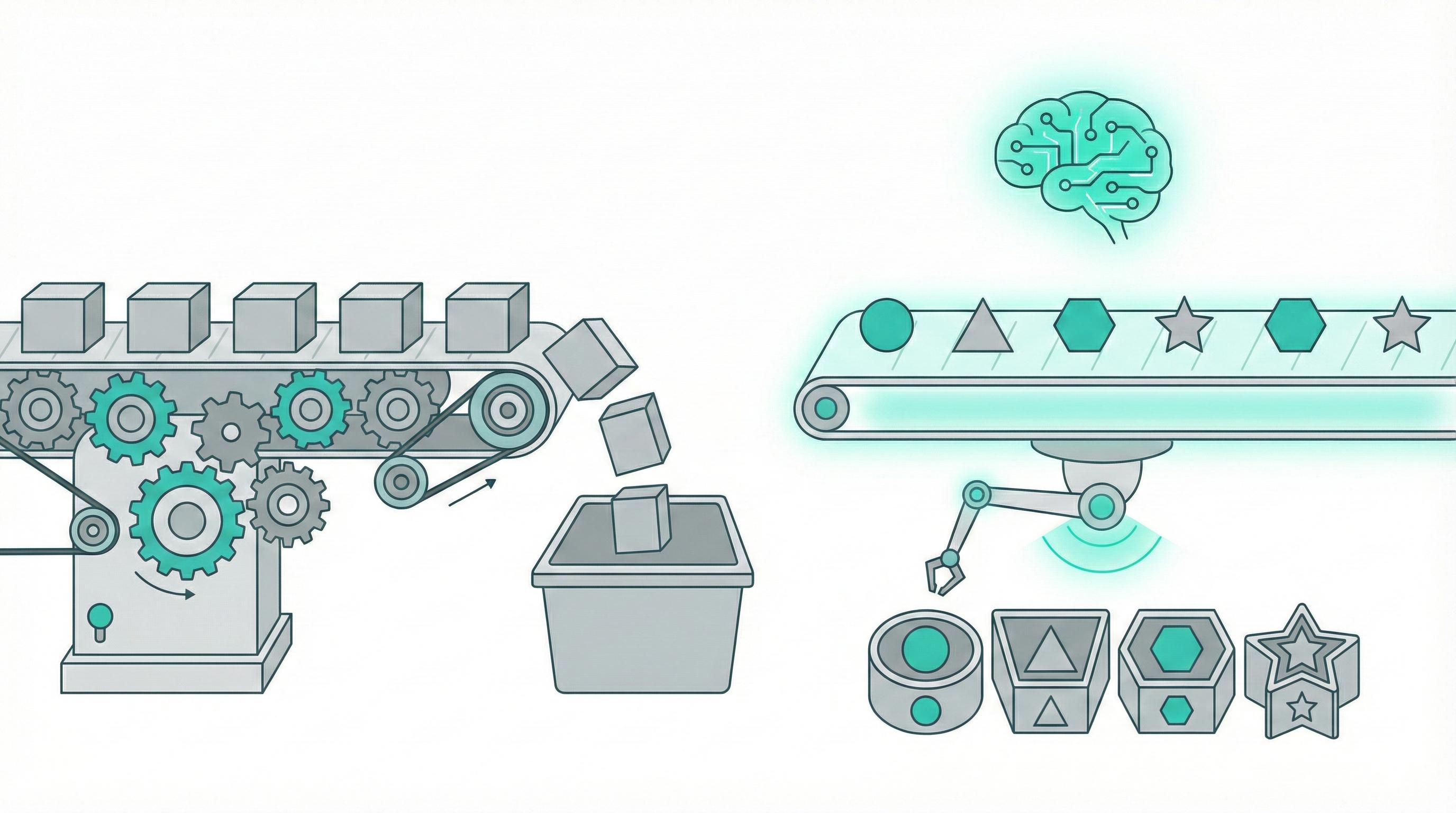
The terms "AI" and "automation" get used interchangeably in most business conversations. Vendors call everything "AI-powered" because it sounds better in a pitch. But the distinction matters — because it affects what you buy, how much you spend, and whether the solution actually works.
Here's a practical guide to understanding the difference and knowing which one your business needs.
Simple Automation: The Workhorse
Simple automation follows rules. "If this happens, then do that." There's no intelligence, no learning, no judgment. Just reliable execution of predefined steps.
Examples of simple automation: when a form is submitted on your website, automatically add the contact to your CRM, send them a welcome email, and notify your sales team. When an invoice is paid, mark the project as current, update the client record, and archive the invoice. Every Friday at 5pm, compile data from three sources into a report and email it to the team.
Simple automation is fast to implement, affordable, and extremely reliable. It breaks only if the underlying tools change. It works 24/7 without supervision. And it handles the vast majority of "busywork" that frustrates small business teams.
Best for: repetitive tasks with clear rules, data that needs to move between systems, notifications and reminders, scheduled reports and updates, any process where the steps are the same every time.
AI-Powered Automation: The Specialist
AI adds a layer of judgment. Instead of following rigid rules, it can handle ambiguity, interpret unstructured data, and make decisions based on patterns.
Examples of AI in business: reading a customer email and determining whether it's a complaint, a question, or a sales inquiry — then routing it to the right team. Scanning 500 contracts to find specific clauses or terms without reading each one manually. Summarizing meeting transcripts into action items. Generating first drafts of client proposals based on past successful proposals and the current brief.
AI is powerful for these tasks because the inputs aren't predictable. Every customer email is different. Every contract is structured differently. A simple "if this, then that" rule can't handle the variation.
Best for: unstructured data (documents, emails, conversations), tasks requiring interpretation or judgment, high-volume work where manual review is impractical, pattern recognition across large datasets.
How to Know Which You Need
Ask yourself two questions about any manual task you want to eliminate:
Question 1: Are the steps the same every time? If yes — simple automation. If the steps vary depending on judgment calls — consider AI.
Question 2: Is the input predictable and structured? If you're working with clean data, form submissions, or structured records — simple automation. If you're working with free-text emails, documents, images, or conversations — AI may be needed.
In practice, most small businesses need 70-80% simple automation and 20-30% AI at most. The ratio shifts toward AI only when you're dealing with high volumes of unstructured data.
The Cost Difference
This is where the practical implications get real.
Simple automation typically costs hundreds to a few thousand dollars to set up, uses affordable tools with predictable monthly pricing, requires minimal maintenance, and rarely breaks.
AI solutions typically cost thousands to tens of thousands to implement properly, may have usage-based costs that scale with volume, require ongoing tuning and monitoring, and need human oversight for quality.
That doesn't mean AI isn't worth it — for the right problems, the ROI is massive. But spending $15,000 on an AI solution for a problem that a $500 Zapier flow could solve is a waste of money.
The Honest Assessment
Here's how we approach it with our clients: we map every manual process, categorize each one as "rules-based" or "judgment-based," and recommend the simplest effective solution for each.
Usually, the result is a mix. Some processes get simple automation. A few get AI. Many just need better tools or clearer workflows. And the total cost is a fraction of what an "all AI" approach would have been.
The goal isn't to use the most impressive technology. The goal is to give your team their time back — in the most reliable, affordable way possible.
5 Signs Your Business Has Outgrown Manual Processes
Growing businesses don't fail because of bad products — they fail because their systems can't handle the scale. Here are the warning signs.
The Death of the Virtual Assistant: Why 'Agentic AI' Is the New Operations Manager
Why hiring a human VA to do repetitive tasks is now a liability — and how autonomous AI agents are replacing entire departments.